
A feedback form measures the room, not the work
Everyone rates the trainer highly and goes back to the desk. Six weeks later nobody can say whether the pitch got clearer, whether the pauses stopped being filled, or whether the money bought anything at all, because nothing was measured before, so there is nothing to compare against.
What you end up with
A comparison you can put in front of the person who signed the invoice, in language that does not need the vendor in the room to explain it.
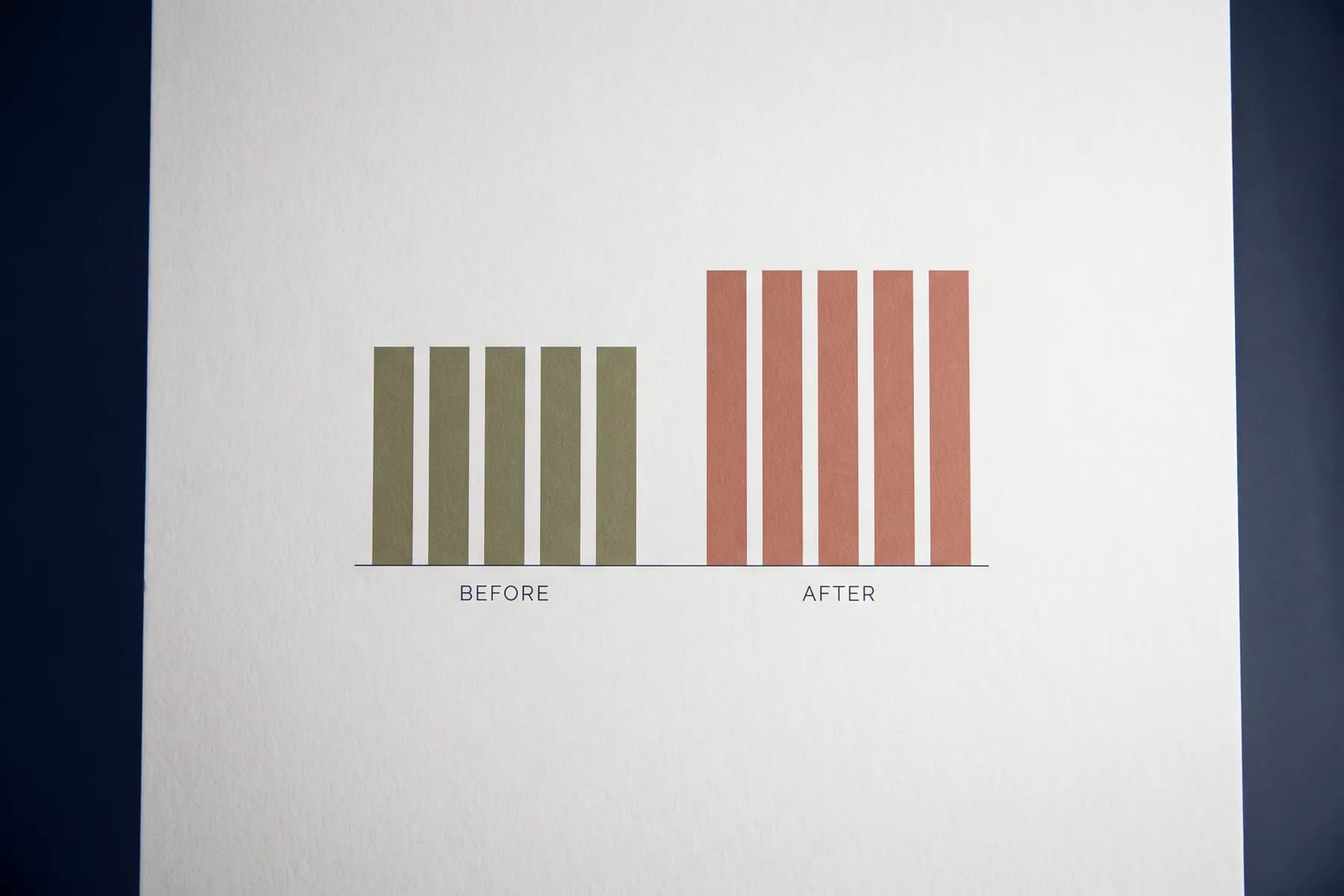
- A before and after for each of the five dimensions, on the same scale.
- The distance between the team and its own strongest communicator, measured before and after the course.
- A per-person view for the person themselves, and aggregates for everybody else, never a ranking.
- Every number traceable to what was counted: words, pauses, pitch range, gesture, and the rest.
What this will not tell you
The honest limits, because a training evaluation that overstates itself is worse than none, it survives exactly until somebody senior asks a hard question about it.
- It does not prove the training caused the change. People also improve because they practised, changed team, or had a good week. What it gives you is a measurement where you previously had a survey.
- It does not evaluate the trainer. It measures the people who attended, and only the delivery they agreed to record.
- Team figures need at least four people with analyses, and are withheld entirely below that, so a small cohort gets individual results and no group number.
- It is not used for hiring, firing, promotion or any assessment of a person. It measures how a message came across, and that is all it measures.
Four channels, five dimensions, and what each one counts.